← Back to Briefs
Loading dispatch…
Here’s what’s happening in geopolitics today. Washington and Jerusalem are aligning their messaging on Iran, with Marco Rubio hinting at pre-emptive coordination, Benjamin Netanyahu insisting the war won’t drag on for years, and Moscow pushing back as Sergei Lavrov says there’s no evidence Tehran was building a nuclear weapon.
Meanwhile, Kabul is rocked by blasts as Afghan-Pakistani border clashes intensify, adding another flashpoint to an already volatile regional picture. In today’s deep dive, we take a look at the importance of the Huliaipole front and key events coming out of the Middle East.
US Secretary of State Marco Rubio told reporters that the timing of recent US airstrikes on Iran was influenced by intelligence indicating that Israel was planning its own attack, and that Washington struck preemptively to prevent Iran from retaliating against American forces. Rubio defended the joint US–Israeli operation as a defensive measure aimed at limiting casualties, saying the administration acted ahead of expected Iranian counterattacks rather than waiting to absorb a blow. His remarks underscore how closely coordinated and politically charged US strategy has become amid the wider Middle East conflict.
Netanyahu told Fox News that the ongoing conflict triggered by U.S. and Israeli strikes on Iran “won’t be an endless war,” saying it may take some time but “is not going to take years,” framing the campaign as a quick and decisive action rather than a protracted fight. Netanyahu’s comments come amid intensifying regional escalation and reflect efforts by Israeli leadership to reassure both domestic and international audiences about the campaign’s scope and duration.
Russian Foreign Minister Sergei Lavrov said that Moscow has not seen any evidence that Iran was developing nuclear weapons, directly challenging one of the key justifications cited by the US and Israel for their military actions against Tehran. Lavrov made the remarks during talks with Brunei’s foreign minister in Moscow, framing the conflict as dangerous for regional stability and calling for an immediate cessation of hostilities.
Explosions and heavy gunfire were heard in Kabul as Afghan and Pakistani forces continued intense clashes along their long, contested border, with AFP journalists reporting blasts and anti-aircraft fire in the Afghan capital. The violence follows days of reciprocal strikes, including Pakistani air and ground attacks on Afghan territory and retaliatory actions by Afghan forces after Islamabad accused Kabul of harbouring militant groups, prompting both sides to report military gains and casualties. The United Nations has noted significant civilian harm amid the fighting.
German Chancellor Friedrich Merz is traveling to Washington this week for talks with Trump, marking the first visit by a European leader since US-Israeli strikes on Iran escalated regional tensions and disrupted key oil and transport routes. Merz’s agenda is shaped by the fallout from the Middle East conflict, with Berlin balancing support for allied security objectives against concerns over escalation and international law, even as he urges coordinated planning for a post-conflict future and European interests.
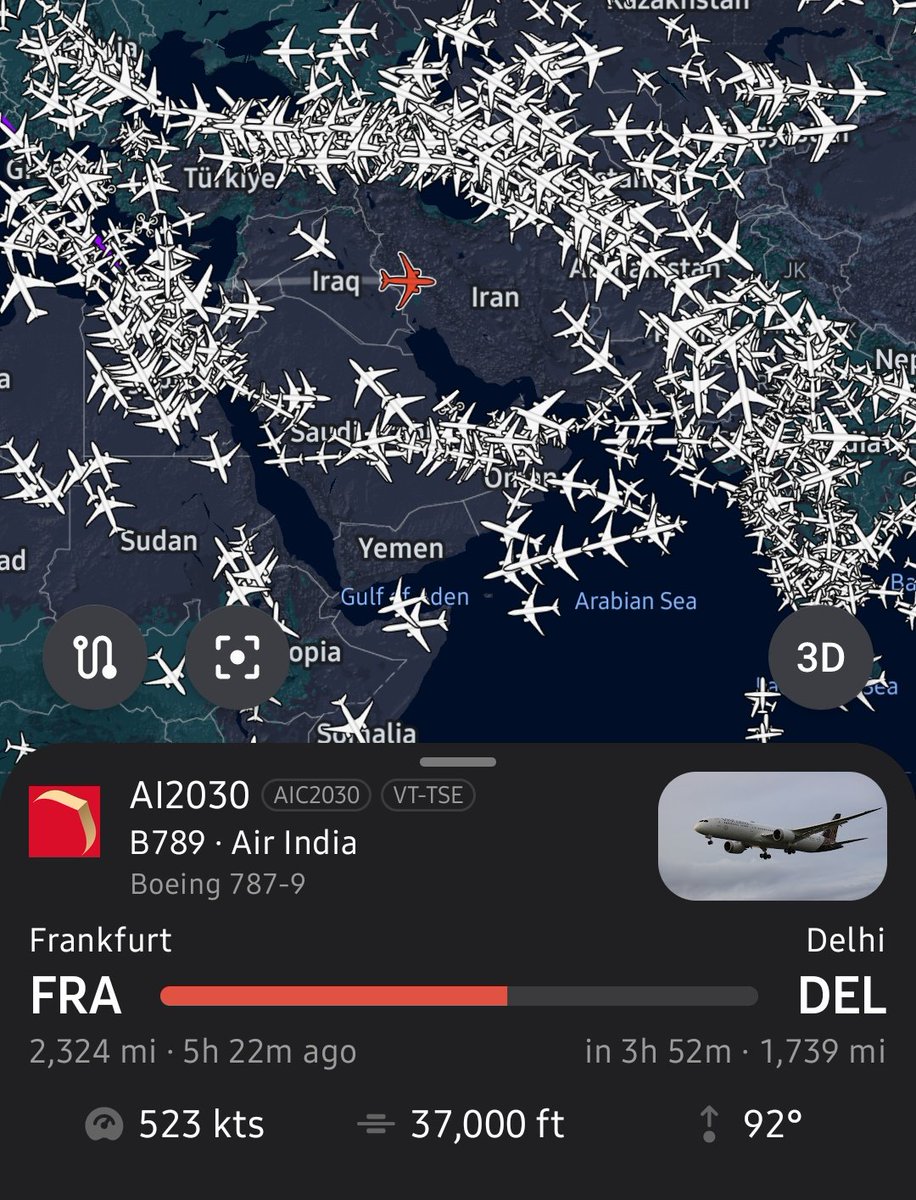
Overnight and into this morning, U.S. and Israeli airstrikes expanded across Iran, hitting Tehran, Bushehr, Isfahan, Shiraz, Karaj and additional cities, including port and northwestern regions. Iran retaliated with new waves of strikes against Israel, Bahrain, Qatar, Kuwait, Cyprus, Iraq, and for the first time the ports of Fujairah in the UAE and Salalah in Oman—signaling deliberate escalation. Israel intensified attacks on Hezbollah strongholds in Lebanon following rocket fire and launched a limited ground offensive in the south as Lebanon’s army pulled back. Israel has mobilized 100,000 reservists. At least 17 countries are now directly or indirectly implicated in the widening conflict.
Based on the updated strike map, U.S.–Israeli air operations are steadily expanding deeper into central and eastern Iran. The widening footprint suggests progressive degradation of Iranian air defenses, with airspace increasingly contested in Washington and Jerusalem’s favor. The confirmed use of B-1 and B-2 bombers indicates a shift toward hardened and underground targets, signaling that subterranean facilities are a priority in this phase of Operation Epic Fury.
Despite this, Iran continues to project force across the region. Drone are proving difficult to intercept, with cumulative effects becoming more visible. The recent F-15E incident raises questions about allied coordination—either notification gaps or significant communications and radar vulnerabilities, I would suspect potentially exploited through Iranian drone attacks on communications and radar systems in the Gulf.
This is a race of who can outlast the enemy's supply. Iran is estimated to have 2500-3000 short and medium range missiles, with roughly over 500-600 already fired. The question remains how many can Iran still produce, what is their long term plan? As regional interceptor stocks plummet Iran is likely to drag this conflict out (if it can maintain salvo launch capabilities - which it believes it can). This is something the U.S. does not want, it wants a quick war.
Kurdish Involvement? In recent days we have seen significant airstrikes on Western Iran near the border of Iraq. We now also have visual confirmation of attacks on border posts, equally – Iran has targetted the HQ of a local Kurdish political party with drones. Things are getting interesting. President Trump contacted Iraqi Kurdish leaders as the U.S.-Israel campaign against Iran began, highlighting their potential strategic role. Kurdish Peshmerga forces control key territory along the Iran-Iraq border and could add experienced ground troops to what is currently an air-focused war effort. Kurds, one of the largest stateless ethnic groups spanning Iraq, Iran, Syria and Turkey, have decades of combat experience and previously partnered with the U.S. against ISIS. Days before the war, five Iranian Kurdish dissident groups formed a coalition opposing Tehran and accused Iran of missile and drone strikes. However, Turkey’s hostility toward Kurdish armed groups and internal Kurdish political divisions complicate any expanded role – this may also unite Iranians around territorial integrity. I recommend reading the full Axios article on this – Netanyahu is leading the charge here. read more
TODAY IN HISTORY (March 3, 2005): Steve Fossett's circumnavigation of Earth
On this day in 2005, American adventurer Steve Fossett became the first person to complete a solo nonstop circumnavigation of the globe without refuelling when he landed in Kansas after more than 67 hours in flight.

Yes, more evidence that the tank is still appreciated on the modern battlefield. Recent footage shows a pair of turtle tanks conducting a mission under the cover of drones.
Today’s Conflict Tracker turns to the Lyman and Sloviansk front as Russia launches frantic counterattacks after significant localised advances.
Renewed war in northern Ethiopia is reshaping regional alliances, threatening stability across the Horn of Africa and potentially complicating external support for Sudan’s RSF.